Sign In

"The era of artificial intelligence is coming." But what does that really mean?

Haebom
Two big stories from the worlds of technology and finance have grabbed our attention lately. One is NVIDIA soaring past a staggering $2 trillion market cap, and the other is Dell’s bold prediction that “all PCs will eventually become AI PCs.” These two events are clear signs of the dynamic changes in the tech industry and the stellar progress of AI, but interpretations of them differ widely depending on who you ask.
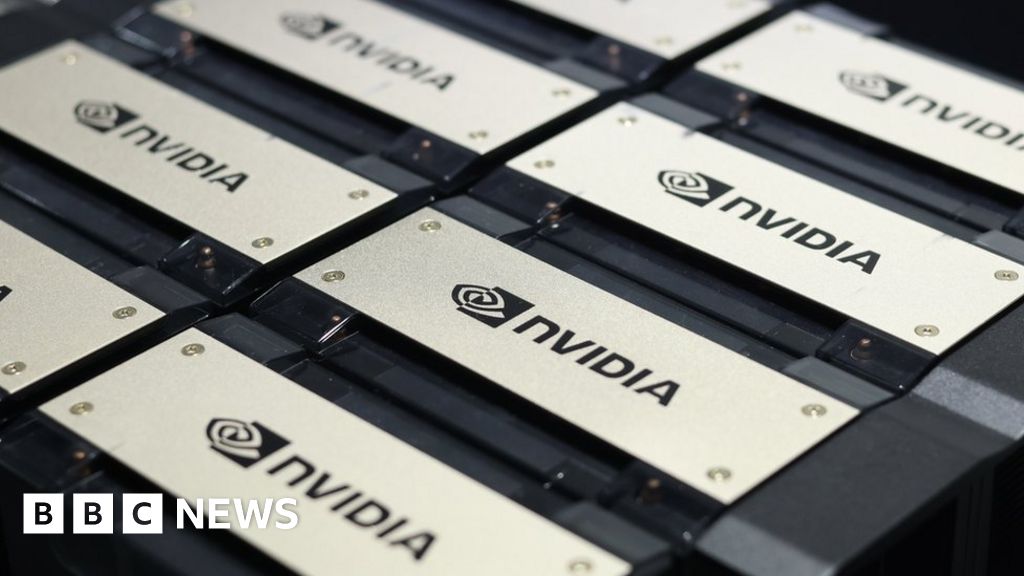
First off, NVIDIA topping $2 trillion in market cap is a testament to just how much excitement there is among investors for AI technology. It shows that demand for AI solutions like NVIDIA’s data center chips is on the rise. In particular, the spike in orders for AI inference and training chips such as NVIDIA’s H100 Tensor Core GPU is a strong sign of just how dominant NVIDIA has become in the market.
However, not everyone is optimistic. Torsten Slök, chief economist at Apollo Global Management, warns of overheating in the AI market, describing the current situation as a "bubble" even more severe than the dot-com bubble of the 1990s. He argues that the current valuations of the top 10 companies in the S&P 500 are overvalued compared to the tech bubble era, suggesting potential risks for investors. ($APO is a private equity firm with approximately 800 trillion won in annual assets under management. - Wikipedia )
By contrast, the CEO of JP Morgan recently said in a CNBC interview that the current AI boom isn’t a bubble but is actually connected to the real economy, and that we’ll all feel this change soon. He commented that this could become a singularity leading to cancer cures or reaching frontiers humans haven’t accessed yet—but at the end of the interview, he gave himself an out by saying he’s an optimist. (haha)
Meanwhile, Dell’s announcement gives us another intriguing vision for AI’s future. Dell predicts that all PCs will eventually be equipped with AI features, a reflection of technological progress and shifting user needs. As AI hardware like neural processing units (NPUs) increasingly blends with CPUs, we can expect AI to be deeply woven into everyday computing tasks.
이 글을 기반으로 삽화를 그려달라니 이런 것을...
Lately, I've been meeting a lot of people face-to-face to introduce or set up AI models, and through these conversations, I can genuinely feel that both individuals and businesses have a real need for AI and ultimately want their own AI.The biggest hurdle seems to be security. Companies want to use AI while keeping internal or confidential data protected, while individuals get creeped out by the idea that AI might learn everything about them, so privacy concerns are huge.As a result, everyone ends up wanting on-device/local AI, and for now, the solution seems to be fine-tuning sLMs—that’s how most are approaching it these days.
Recently, startups at home and abroad have started selling models customized for individual companies. The typical approach seems to be to build a foundation model, fine-tune it with each company’s data, upload essential or sensitive materials to VectorDB, then use RAG and tweak parameters like top_k to cut down on hallucinations—even if this is labor-intensive, it’s clear it pays off.Some places even call open-source foundation models their own after heavy fine-tuning and mods… but hey, as long as they perform, isn’t that what matters? It’s not illegal or anything.
On a personal note,I think it’s going to come down to who makes SLMs easiest to train and use from a UI/UX perspective. Lately, I’m really interested in making this work locally.For example, running it at home on a 4070–4090 or even on an Apple silicon chip. Thinking about using it on a closed network, within a company, or right on the device itself—this direction honestly seems a lot more fun. If you want to talk about this, hit me up with a DM or an email anytime. (Apparently, there’s now a DM feature on the slash page!)
Subscribe to 'haebom'
📚 Welcome to Haebom's archives.
---
I post articles related to IT 💻, economy 💰, and humanities 🎭.
If you are curious about my thoughts, perspectives or interests, please subscribe.
haebom@kakao.com
Subscribe