Sign In

Winning Elections with Artificial Intelligence

Haebom
2024 is a year of global elections. Starting with Taiwan, there are a series of important elections, including the Indonesian presidential election (February 14), South Korea’s National Assembly election, and the US presidential election. Recently, as discussions have arisen about the need to regulate bias in election information—especially with the expansion of generative AI and AI-powered search results—I wanted to share an interesting example of how AI is being used.

A story about Indonesia’s election

With Indonesia’s presidential election set for February 14, generative artificial intelligence (AI) is bringing dramatic innovation to large political campaigns. Prabowo Subianto’s AI-generated avatars—posing with a Korean-style finger heart or cuddling a favorite cat—are gaining popularity, especially among younger voters.
The Great Indonesian Movement Party (Partai Gerakan Indonesia Raya) , to which Prabowo Subianto belongs, is a party with a strong image of being a hard-line conservative party that opposes policies on sexual minorities and citizens' democratization movements. In particular, it ran as a presidential candidate in the last presidential election, but lost to Joko Widodo of the progressive Democratic Resistance Party (Partai Demokrasi Indonesia Perjuangan ) . To summarize the election at the time, Prabowo Subianto was a former warlord who actually suppressed the democracy movement with force, while Joko Widodo was a civilian who had been involved in the movement for a civilian government. Can you imagine the atmosphere? (According to the final vote count, Joko Widodo got 55.5%, Prabowo Subianto got 44.5%)
After Joko Widodo became president, he nominated Prabowo Subianto as Minister of Defense—for the sake of national unity. Subianto has remained as Minister of Defense, but now he's running for president again. Indonesia has a three-term limit, so Joko Widodo can't run anymore, and the Democratic Struggle Party has put forward a different candidate. Also, Joko Widodo and the current leader of the Democratic Struggle Party are on bad terms—their big fights even made international news... (Ruling party vs. president dynamic... Oops?)
To top it off, Joko Widodo put the Democratic Struggle Party’s leader in an awkward position by having his eldest son, Gibran Rakabuming Raka, run as Prabowo Subianto’s vice president. (Indonesia holds elections similar to the US, where presidential and vice presidential candidates run as a ticket.) So, yes—the person on the left of the above billboard is Prabowo, and the one on the right is Gibran. I swear, drama in other people’s houses is always the most entertaining.

From an out-of-touch old man's image to a cute one—thanks to AI avatars

Anyway, Indonesia’s use of generative AI in election campaigns is unprecedented—they are using AI tools for campaign art, social media sentiment analysis, interactive chatbot building, voter targeting, and more.
Especially, the Prabowo campaign has put AI-driven image strategy front and center, shifting from his previous two presidential races’ fiery nationalist image to highlighting a new ‘gemoy’ (cute and lovable) persona.
Having gone through two defeats to Joko Widodo, Prabowo needed to reinvent his conservative, nationalist, military man image. Since he can’t undo the past, he’s gone for a cute concept. The character made with avatars like these is proving far more popular than expected. In recent polls, he’s reportedly winning by a landslide far outside the margin of error.
45.4% vs 27.4% 이후에는 더 지지도가 올랐다고 참고로 50% 넘으면 결선투표 없습니다.
Unless something really unexpected happens, this election will most likely be Prabowo’s third run—with the current president’s son Gibran as his vice president—and he’s so far ahead it might even end in the first round, which is unusual.
This kind of change looks set to revolutionize election campaigning not only in Indonesia but worldwide. AI-powered campaigns provide affordable, customized campaign tools—and now, these kinds of tailored campaign resources, which were once only available to major candidates, are accessible even to legislative candidates.
However, using generative AI in political campaigns is causing a lot of controversy when it comes to regulation and ethics. Although AI tech companies ban their tools from political use, Indonesia’s campaign has already shown cases that go beyond these guidelines. This shows how much we need regulations and policies on AI political use—not just in Indonesia, but everywhere. Personally, while I think deliberately tuning AI to promote certain beliefs and then spreading it is questionable, what people do with the content after the fact is a bit of a gray area. (It's hard to regulate anyway)

What about Korea?

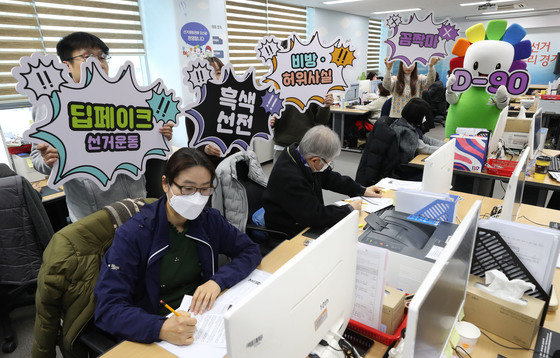
So, what about Korea? The aides probably won’t be happy about it(I can already hear the workload piling up),but the National Election Commission has allowed the use of generative AI based on existing campaign materials. However, they say they will strictly punish false promises or malicious deepfake videos.
I’m genuinely curious to see what kinds of creative content will pop up in this general election.
Subscribe to 'haebom'
📚 Welcome to Haebom's archives.
---
I post articles related to IT 💻, economy 💰, and humanities 🎭.
If you are curious about my thoughts, perspectives or interests, please subscribe.
haebom@kakao.com
Subscribe