Sign In

How game theory enhances the accuracy and efficiency of artificial intelligence

Haebom
Game theory is a branch of mathematics that studies how individuals or organizations make decisions in different situations. It analyzes how each person or group acts to maximize their own benefit, and how those actions interact with the choices of others. In short, game theory explores how to find the best decision in situations where your choices are influenced by others. This might sound complicated, so let's look at a few examples.
사실 죄수의 딜레마로 설명되는 이론이기도 합니다. 이 상황의 경우 A와 B는 서로 정보교환을 할 수 없는 독립된 환경에 있어야 한다는 걸 전재로 합니다.
Imagine a dolphin and a whale trying to work together to catch more fish. Each can choose whether to cooperate or not. If both cooperate, they both get lots of fish. If only one cooperates and the other doesn’t, the one who does not cooperate gains more. If neither cooperates, both end up with fewer fish. This is how game theory explains the impact of each choice on the outcome.
Looking closer, think about the workplace: coworkers compete for promotions. Again, each person can choose to cooperate or compete. If everyone works together, the work environment gets better, overall efficiency increases, and the company can reward everyone with bonuses. On the other hand, if someone chooses to compete, their personal gain may go up in the short term, but in the long run, the work atmosphere could worsen.
Explained like this, we can also apply game theory to traffic jams. When every driver tries to take the fastest route, traffic congestion can occur, and this too can be analyzed with game theory. If everyone chooses the shortest route, that way can actually become the slowest. But if some drivers take slightly longer routes, overall traffic flow may improve.
The key in game theory is to understand how each choice impacts others and, based on that, to come up with the best possible strategy.

So what does game theory have to do with AI?

Game theory can be used effectively to improve the efficiency and accuracy of AI, especially large language models. Traditional ways of training AI can sometimes lead to inconsistent or biased outcomes. But if you incorporate game theory, AI can take into account various scenarios and options, enabling it to make more accurate and fair decisions.
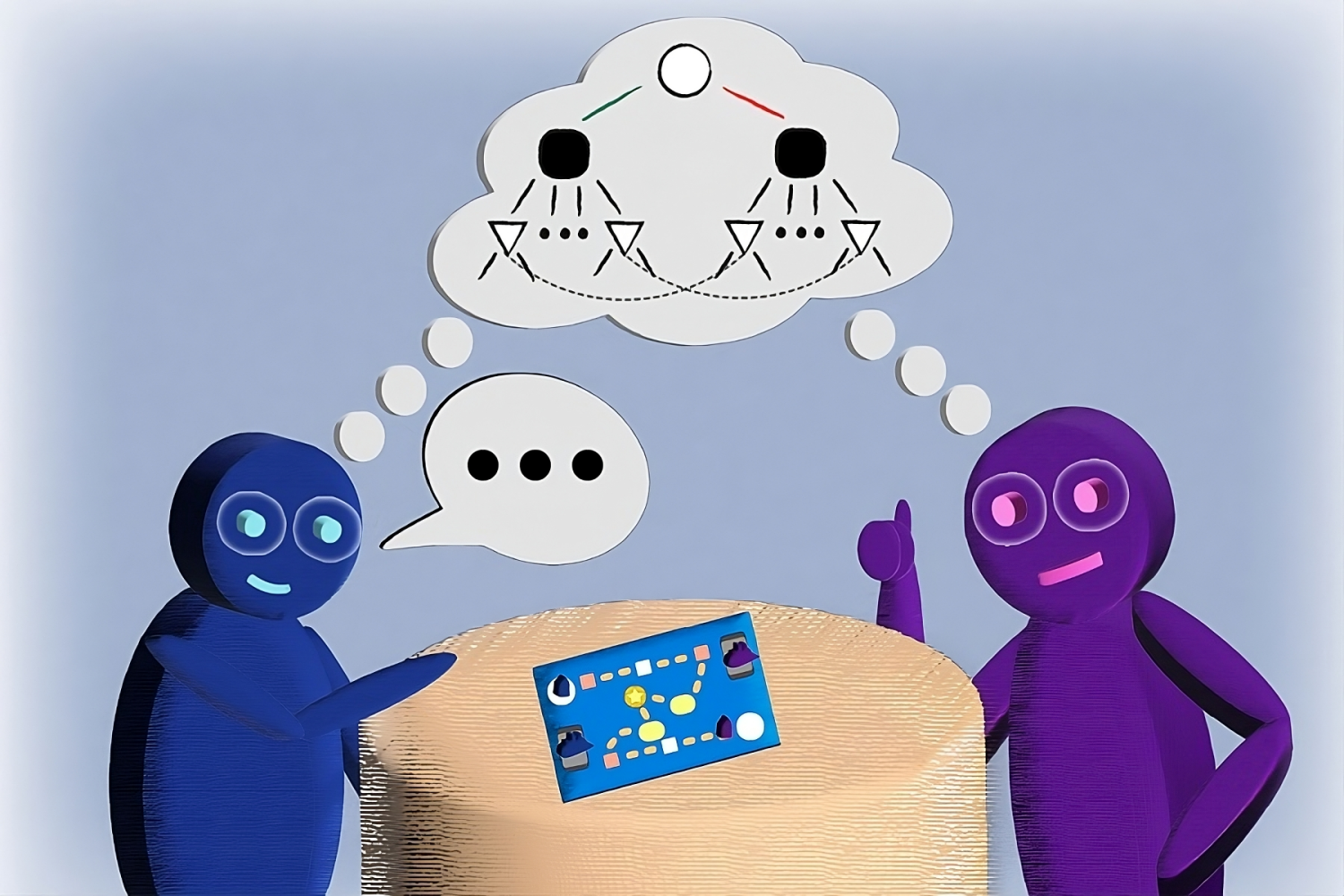
For example, it's designed to improve consistency between two systems within a language model: the 'generator' that creates questions and the 'discriminator' that evaluates the generated answers. For instance, when asked “What is the capital of France?”, the generator might initially think there's an 80% chance it's “Paris.” Then, it flips a coin to decide whether to answer truthfully or not, and this decision influences how the discriminator will evaluate the generator's response.
The discriminator judges whether the generator's answer is true or false, awarding points to both if it's true, and no points if not. This process repeats about 1,000 times, and through each round, the generator and discriminator learn and adjust to each other's responses. Through this interaction, the two systems gradually produce answers that align more closely, greatly improving the overall model's consistency and accuracy.
This game helps the language model provide consistent answers even with various question formats. By choosing Nash equilibrium in this process, the model becomes more reliable and users can trust its answers even more.
💬
Nash equilibrium: This refers to a state where neither player can improve their outcome by changing their own strategy.
Researchers at MIT developed a method called the 'consensus game.' It's a game in which the model is encouraged to find an answer that it can agree on in both generation and discrimination modes. Through this game, the model can enhance its accuracy and internal consistency.
Personally, I came across this paper while reading this year's ICLR papers, and it turns out it actually won an award at NeurIPS last year. Lately, I feel this even more—because AI works 'like' people, it's a great example showing how applying concepts from social sciences can lead to surprisingly good results.
Subscribe to 'haebom'
📚 Welcome to Haebom's archives.
---
I post articles related to IT 💻, economy 💰, and humanities 🎭.
If you are curious about my thoughts, perspectives or interests, please subscribe.
haebom@kakao.com
Subscribe